Reviewed by Hamza, Avian Care Lead at Dubai Birds since 2018
Diet, housing, training, mutations, and UAE-specific care for one of Dubai's most popular talking parrots.
_Last reviewed: May 2026_
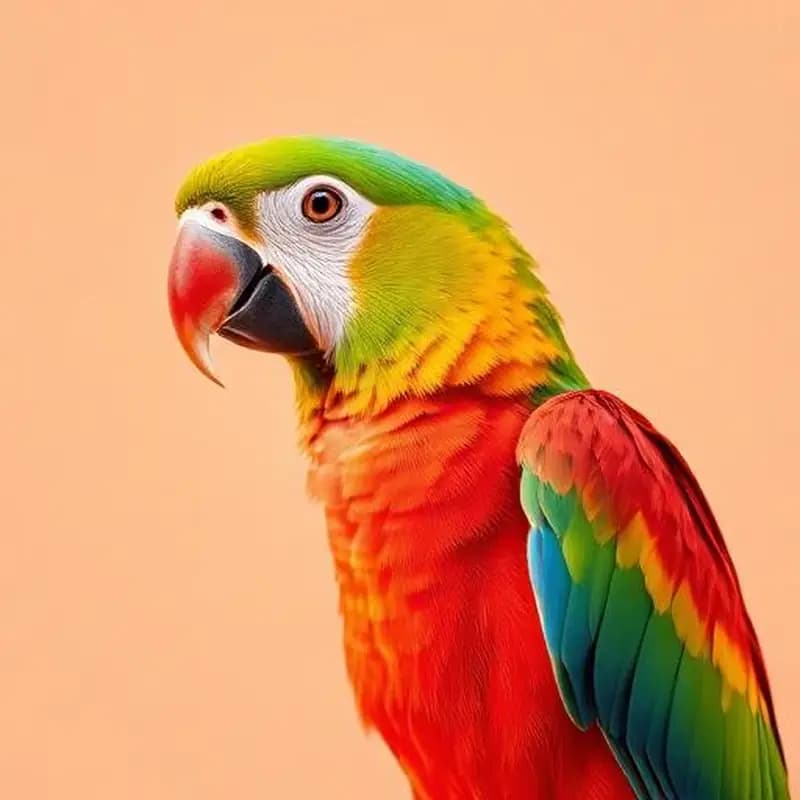
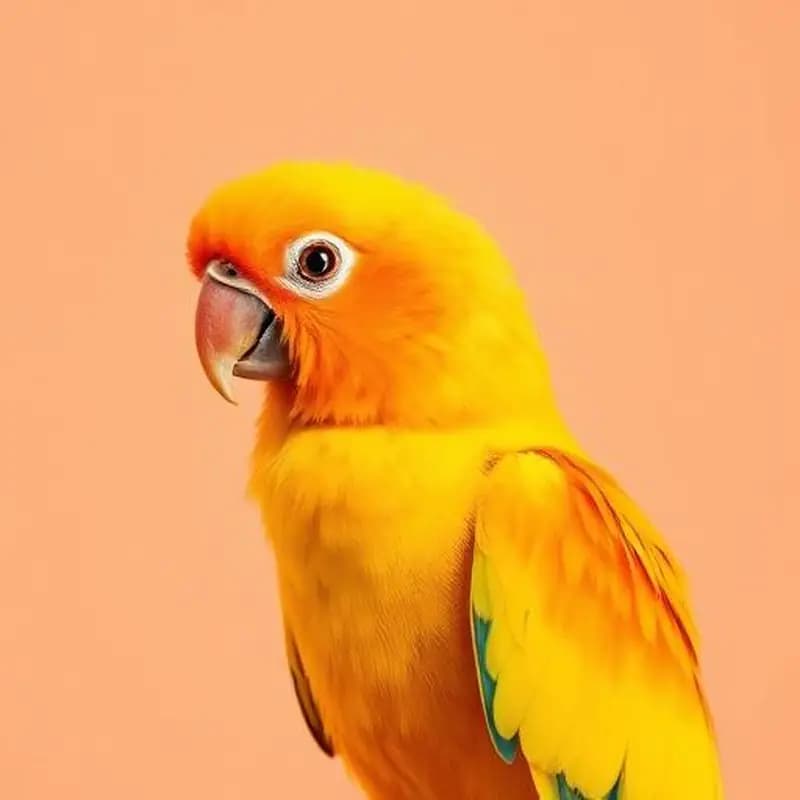
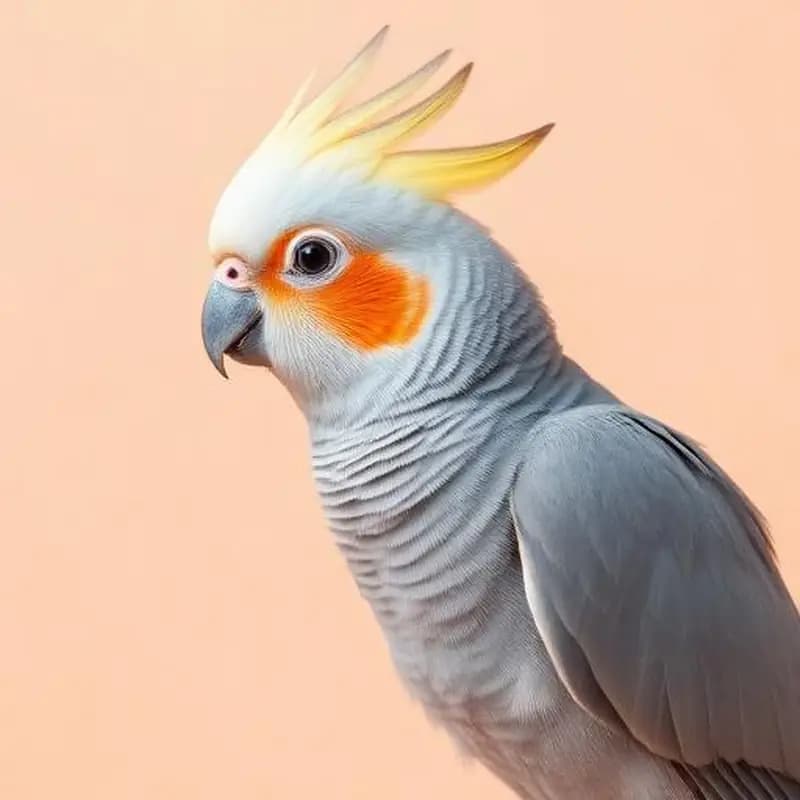
The Indian Ringneck Parakeet (Psittacula krameri manillensis) is one of the most popular hand-raised parrots at Dubai Birds. It is the smallest of the talking parrots we sell, the longest-tailed, and one of the most striking once colour mutations enter the picture. A well-raised Ringneck is also one of the better mid-budget choices for buyers who want clear human speech without committing to an African Grey's price tag or a macaw's space requirements.
This guide is the same brief our team walks every Ringneck buyer through at our Warsan 3 aviary. Read it before you buy, during the first 30 days at home, and as a reference whenever something looks off.
Native habitat and origin
Indian Ringneck Parakeets are native to the Indian subcontinent, from Pakistan through India, Nepal, Sri Lanka, Bangladesh, and Myanmar. The Indian subspecies (P. k. manillensis) is the bird the global pet trade is built on. A separate African subspecies (P. k. krameri) ranges across the Sahel from Senegal to Sudan. Both have established feral populations in dozens of cities, London, Brussels, Tehran, Istanbul, and even parts of the UAE see naturalised Ringnecks roosting in date palms.
In the wild, Ringnecks live in flocks of 20-100 birds, roost communally in tall trees, and forage at canopy and ground level for fruit, seeds, blossoms, and cultivated grain. They are agricultural pests across much of their range, which is part of why they handle captive life well.
The Indian Ringneck is not currently listed on CITES Appendix I, II, or III. See [BirdLife International species data](https://www.birdlife.org) for current population status and the [CITES species database](https://cites.org) to confirm the listing status before any cross-border purchase. The UAE legal framework is summarised at [MOCCAE](https://www.moccae.gov.ae) and on our [UAE exotic bird laws page](https://dubaibirds.ae/uae-exotic-bird-laws/).
Lifespan, size, weight
Lifespan: 25-30 years in captivity with proper care. The oldest verified Ringneck lived past 34.
Length: 38-42 cm, of which roughly half is tail.
Weight: 110-140 g for a healthy adult.
Wingspan: approximately 42-47 cm.
Sexual maturity: 18-36 months. Males develop the characteristic black-and-pink neck ring at 2-3 years; females remain plain-necked for life.
A Ringneck purchased at 4-6 months in 2026 will likely still be alive in 2050. Plan accordingly, including who in the household will care for the bird if circumstances change.
Mutations and what they look like
Indian Ringnecks have been selectively bred since the 1960s into more colour mutations than any other psittacine except the budgie. The mutations you'll most often see at Dubai Birds:
Green (wild-type). Bright apple green with the classic black-and-rose neck ring on adult males.
Blue. Powder blue body with a black-and-white neck ring on adult males.
Lutino. Bright yellow body with red eyes and a pink neck ring.
Albino. Pure white with red eyes, a recessive double mutation (Lutino + Blue).
Cinnamon, Grey, Violet, Turquoise. Less common combinations bred for collector interest.
Mutation does not affect lifespan or temperament if the breeder pairs responsibly. It does affect price, Green sits at the floor; Blue, Lutino, and Albino run higher; double mutations like Violet Blue or Cinnamon Turquoise sit highest. See current AED ranges at [bird-prices-uae](https://dubaibirds.ae/bird-prices-uae/).
Personality, talking, and noise level
Bonded but independent. A hand-raised Ringneck bonds firmly to its handlers but tolerates being alone better than an African Grey or cockatoo. They are content in their cage with foraging toys for several hours, which makes them well-suited to working households.
Excellent talkers. Ringnecks are among the clearest-speaking parrots in the world, often outranked only by African Greys. Most pet Ringnecks settle at 50-250 words; some pass 500. Voice clarity is high and they mimic intonation convincingly.
Hormonal in adolescence. Ringnecks go through a "bluffing" phase between 12 and 24 months, sudden nippy behaviour, distance-keeping, sometimes biting. This phase passes with consistent calm handling. Walking away from biting (rather than reacting) shortens the phase substantially.
Apartment-suitable noise level. A Ringneck's natural call is sharp and carries, but they do not scream the way conures, cockatoos, or macaws do. Two short "chorus" sessions at sunrise and sunset, typically 10-15 minutes each. Suitable for apartments in JLT, Marina, Downtown, or Business Bay.
Diet, UAE-specific
A wild Ringneck eats fruit, seeds, blossoms, and grain. A pet Ringneck in Dubai will not, so the work falls to the owner. Build a balanced plate from what is reliably available year-round at Carrefour, Spinneys, Waitrose, and Union Coop.
Daily plate (adult Ringneck, ~125 g body weight)
160-70 % high-quality pellets, Harrison's, Roudybush, ZuPreem Natural, or Tops. Stocked at Pet's Delight (Mall of the Emirates and other branches) and online via DubaiPetFood.
225-30 % chopped fresh vegetables, kale, spinach, carrot, sweet potato, capsicum, courgette, broccoli, cauliflower, green beans, sugar snap peas. Heavy on dark leafy greens and orange/red veg for Vitamin A.
35 % fruit, apple (no seeds), pomegranate, mango, papaya, banana, blueberries. Fruit is sugar; treat it as a treat.
4Small daily seed mix as a top-up, heaping teaspoon of safflower, millet, and canary grass. Seed should be 5-10 % of total diet, not the foundation.
5Cuttlebone clipped inside the cage at all times. Refresh every 8-10 weeks.
6Sprouted legumes 2-3 times a week, mung beans, lentils, chickpeas. Sprouts are the closest thing to wild forage you can give a captive Ringneck and they love them.
Foods to avoid
Avocado, toxic to all parrots.
Chocolate, caffeine, alcohol, fatal in small doses.
Onion, garlic, raw potato, raw mushroom.
Apple seeds, cherry pits, peach pits, cyanide compounds.
Salt, sugar, fried foods, dairy.
Soft fruit left out for more than 90 minutes in summer (May-September). Even with AC running, ambient indoor temperatures in Dubai apartments often touch 28 °C in afternoons; bacterial growth on chopped fruit and veg is rapid.
Housing in UAE climate
Cage requirements
Minimum dimensions: 75 cm wide x 60 cm deep x 90 cm tall for a single Ringneck. The long tail is the constraint, a cage that's tall but narrow forces tail damage from constant brushing against the bars.
Bar spacing: 1.5-2 cm. Wider bars let a Ringneck stick its head through.
Bar gauge: stainless steel or powder-coated steel only. Zinc and lead are toxic.
Perches: 3-4 perches at varied diameters (1.5-2.5 cm) and natural-wood textures. Replace dowel perches, they cause foot lesions.
UAE-specific climate setup
1Indoor temperature: 22-28 °C. Ringnecks tolerate 18-32 °C briefly but stress outside that band, and prolonged heat above 32 °C is dangerous.
2AC airflow: never directly on the cage. Cold air from a split AC unit at full blast causes respiratory infection within days.
3Humidity: 50-60 %. Dubai indoor air with AC running often drops to 25-35 %, drying out feathers and sinuses. A small cool-mist humidifier solves this.
4Light: 10-12 hours of light, 10-12 hours of full darkness. Cover the cage at night.
5Balcony placement: only with shade, only before 9 a.m. or after 5 p.m. Direct UAE summer sun through a balcony window heats a cage to 50 °C in 20 minutes. Power outages during summer are an emergency, always have a battery-powered fan as backup.
6Air quality: never use Teflon/PTFE non-stick cookware in the same airspace. PTFE fumes kill parrots in minutes. Avoid scented candles, plug-in fragrances, aerosol deodorant, oven-cleaning sprays, and shisha smoke near the cage.
Daily routine and enrichment
A single Ringneck needs 2-4 hours per day out of the cage and at least 1 hour of structured human interaction. Bonded pairs need less human time but more enrichment.
Morning: open cage, fresh food, 15 minutes of training or shoulder time.
Midday: independent play in a play-stand, foot toys, paper-shredding boxes, foraging puzzles.
Afternoon: skill session, word repetition, recall, target training. 5-10 minutes is enough.
Evening: family social time. Ringnecks want to be in the room, not stared at across it.
Night: 10-12 hours of full darkness in a covered cage.
Rotate at least 6 toys weekly. Foraging puzzles, shreddable paper, untreated leather strips, and natural wood blocks all earn their cost. Ringnecks deprived of mental stimulation pluck their chest feathers within months.
Common health issues
In approximate order of frequency at Dubai Birds:
1Vitamin A deficiency, sinus infections, dull feathers, pasted eyes. Prevented by orange and dark-green vegetables daily.
2PBFD (Psittacine Beak and Feather Disease), viral. Always buy from a breeder who tests their breeding pairs.
3Aspergillosis, fungal lung infection from damp seed bowls in humid summer months.
5Polyomavirus, viral, mostly affects young birds. Test results from the breeder are the gold standard.
6Egg binding (females only), reduce risk by keeping daylight under 12 hours and removing nest-like cavities.
For symptoms see [Lafeber Vet's psittacine disease library](https://lafeber.com/vet/) and [VCA Animal Hospitals' avian section](https://vcahospitals.com). For UAE-based avian vets, see our [recommended vets list](https://dubaibirds.ae/vet-partners/).
Where to buy in the UAE, what to ask any seller
Indian Ringnecks are easier to source legally in the UAE than CITES-listed species. That doesn't mean the source is unimportant. Wild-caught Ringnecks still circulate in some grey-market channels and almost always carry one of: PBFD, undiagnosed psittacosis, or trauma from the trapping process.
Questions to ask any UAE seller
1Hand-raised or parent-raised? Hand-raised Ringnecks are bottle-fed by humans from 2-3 weeks old and tame to handling. Parent-raised birds are healthier physically but rarely tame fully.
2**Fully weaned?** Ringnecks wean at 10-14 weeks. A bird sold "for hand-feeding" before that age is a high-risk purchase.
3Closed leg-band? Captive-bred indicator. Most reputable breeders ring chicks at 7-14 days.
4**Recent avian vet check?** PBFD/polyoma PCR results are the gold standard.
5Breeder name and contact? A real breeder is reachable for life-of-bird advice.
For our sourcing protocol see the [breeder network page](https://dubaibirds.ae/breeder-network/).
Hand-raised vs imported
UAE-bred, UAE-raised Ringnecks adapt fastest to local climate, food brands, and household routines. Recently imported birds need 4-8 weeks of acclimatisation before bonding. At Dubai Birds we prioritise UAE-bred Ringnecks; ask in-store for current availability.
AED price ranges in 2026
Hand-raised, fully weaned, vet-checked Indian Ringneck Parakeets at Dubai Birds typically tier by mutation:
For live AED ranges across the Ringneck mutations we have in stock right now, see the [live price guide](https://dubaibirds.ae/bird-prices-uae/) or the [Ringneck collection page](https://dubaibirds.ae/shop-birds/ring-neck/).
Reviewed by
Reviewed by Hamza, Avian Care Lead at Dubai Birds since 2018.
Are Indian Ringneck Parakeets legal to own in the UAE?
Yes. Indian Ringnecks are not currently CITES-listed, so they don't require CITES Appendix I or II paperwork. A UAE-issued Certificate of Ownership and a standard veterinary health certificate from the seller are the floor for legal ownership. Federal Law 16/2007 on animal welfare still applies, appropriate cage, food, water, and veterinary care.
Can an Indian Ringneck live in a Dubai apartment?
Yes. Ringnecks are quieter than conures, cockatoos, or macaws and adapt well to apartment life in JLT, Marina, Downtown, or Business Bay. They need 2-4 hours of out-of-cage time per day and stable indoor temperatures of 22-28 °C. Avoid placing the cage in direct AC airflow.
How long does it take an Indian Ringneck to start talking?
Most start mimicking sounds at 6-9 months, clear words at 12-18 months, and short phrases by 18-24 months. Hand-raised birds in households where multiple humans speak directly to the bird (not in front of a TV) develop the largest vocabularies. Males tend to talk slightly more than females, but both sexes can be excellent talkers.
What's the difference between a male and female Indian Ringneck?
Male Ringnecks develop the characteristic black-and-rose neck ring at 18-36 months; females remain plain-necked for life. In behaviour, males tend to be slightly more vocal and more reliably tame to multiple household members; females bond more selectively and have egg-binding risk during reproductive cycles.
What is the 'bluffing' phase in Indian Ringnecks?
Between roughly 12 and 24 months, hand-raised Ringnecks often go through a hormonal adolescence where they become nippy, distance-keeping, and occasionally bite. This is species-normal and passes with consistent calm handling. Walking away from biting (rather than reacting with noise or punishment) shortens the phase substantially. The bird returns to its normal personality within 6-12 months.
How big a cage does an Indian Ringneck need?
Minimum 75 cm wide x 60 cm deep x 90 cm tall with 1.5-2 cm bar spacing. The long tail is the constraint, a tall narrow cage forces tail damage from constant brushing against the bars. Bigger is always better. For pair-housing, scale up to at least 100 cm wide.
Are Indian Ringnecks good first parrots?
They're a reasonable choice for owners who have already kept a budgie or cockatiel and want to step up. They are not the easiest first parrot, the bluffing phase requires consistency, and the long lifespan is a 25-year commitment. For a true first bird, a cockatiel or budgerigar is gentler. See our beginner guide for a full comparison.
What do Indian Ringnecks eat in Dubai?
60-70 % pellets (Harrison's, Roudybush, ZuPreem, Tops, buy from Pet's Delight), 25-30 % fresh chopped vegetables (kale, carrot, sweet potato, capsicum), 5 % fruit, and a small daily seed top-up. Sprouted mung beans and lentils 2-3 times a week are the closest thing to wild forage. Cuttlebone in the cage at all times.
How much does ongoing care cost per month for an Indian Ringneck in Dubai?
Roughly AED 120-200 per month for food and consumables (pellets, fresh produce, cuttlebone, paper for foraging). Annual avian vet check is typically AED 250-500. New cage and accessories run AED 800-1,500 every few years. The bird is the cheapest part of ownership.